
Planning & Design
Essential Guide to Effective Kitchen Planning for Your Dream Kitchen Space:
How to Design a Functional, Beautiful Kitchen Layout in Suffolk County, Nassau County, NY.

Planning a kitchen renovation requires balancing aesthetic preferences with practical functionality. This guide walks you through kitchen planning step by step-from measuring your room to choosing cabinets, countertops, and finishes-so you can make confident decisions that actually work for your home and your budget.
Start Here: Kitchen Planning Basics for Nassau & Suffolk County Homes
If you live in Nassau or Suffolk County, there’s a good chance your house was built somewhere between the 1960s and 1990s. Ranches, split-levels, Capes, Hi-Ranches, Colonials-these home styles share a common trait: kitchens that were designed for a different era. We’re talking 70 to 120 square feet of cramped cooking space, single-wall or narrow galley layouts, and walls that block every bit of natural light from reaching the room.
Here’s the thing most homeowners learn the hard way: picking out gorgeous countertops or trendy wall colors won’t fix a kitchen that’s poorly laid out. The kitchen floor plan-where your walls, doors, windows, plumbing, and major appliances go-is the foundation for every successful remodel. Get that wrong, and no amount of pretty tile will save you.
At Galant Kitchens, we help homeowners across Nassau and Suffolk counties build a realistic kitchen plan that fits their budget, family size, and cooking habits. Key factors to consider include defining a clear budget and optimizing the layout before you ever browse cabinet door samples. The kitchen remodeling process includes selecting cabinets, appliances, and a layout type-but it all starts with the plan.
Before we dive in, here are the primary layout types you’ll encounter. Each one gets covered in detail below:
L-shaped kitchen layout
U-shaped and G-shaped layouts
Galley kitchen
Island and peninsula kitchens
One-wall layout
This article gives you practical, step-by-step planning guidance. Finishes and features come later-layout and workflow come first.
Step 1: Measure Your Space and Create a Kitchen Floor Plan
The kitchen remodeling process often starts with measuring the existing space. A kitchen redesign can be planned using 2D and 3D software, but accurate measurements are non-negotiable. Here’s how to get them right in a typical Long Island home:
Measure every wall length to the nearest ¼ inch. Record ceiling height-often 8 feet in older ranches, 9 feet or more in newer builds or renovated areas.
Note the size and position of every window and door, including their distance from corners. These affect cabinet placement and natural light.
Mark the locations of plumbing lines, gas lines, baseboard heating, radiators, and the electrical panel. Moving any of these adds significant cost to your project.
Understand the difference between a general house floor plan and a detailed kitchen floor plan. Your kitchen plan must include appliance clearances, minimum walkway widths (at least 36 to 42 inches), and seating overhang dimensions if an island is involved. Ensure walkways in kitchens are wide enough for comfortable movement.
Use grid paper at ¼-inch scale, a simple online tool that lets you save or download your floor plan for later review, or schedule Galant Kitchens’ free in-home consultation to validate your dimensions before ordering a single cabinet.
Watch for common Long Island constraints: narrow galley kitchens in Capes and Hi-Ranches, load-bearing walls between the kitchen and dining room, and ceiling bulkheads that limit cabinet height. These factors shape your entire kitchen space and plan.
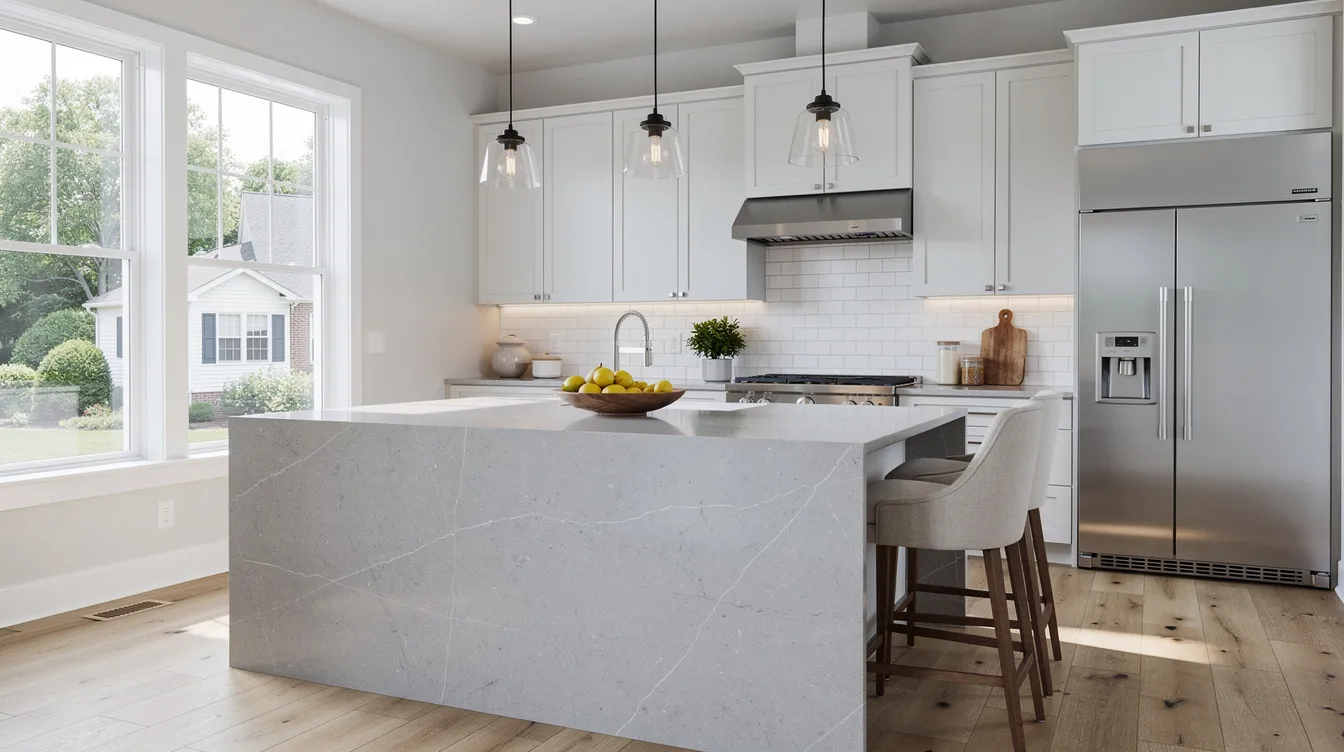
Step 2: Choose the Best Kitchen Layout for Your Home
The best kitchen layout depends on your room shape, available space, natural light, and whether you’re working with a closed-plan or open concept spaces setup. Design tools can help visualize the final kitchen layout before any demolition begins.
L-Shaped Kitchen Layout
An l shaped kitchen layout uses two adjacent walls and works well in many Long Island colonials and split-levels. L-shaped kitchens offer good traffic flow, adaptability, and a convenient setup for daily use, and they work well in both small and large spaces.
For a room around 10 by 12 feet, an L layout supports a small kitchen island or dining table in the center. Keep the work triangle efficient by placing the refrigerator on one leg of the L, the range on the other, and the sink near the corner or centered under a window. Corner storage solutions-lazy Susan’s, blind-corner pull-outs-help you squeeze every inch out of those adjacent walls.
For example, pairing white Shaker cabinets with a light quartz countertop on both runs creates an airy, open feel that makes the room look larger than it is. This style is a Long Island favorite for good reason.
U-Shaped and G-Shaped Kitchen Layouts
U-shaped kitchens wrap cabinetry around three walls, and U-shaped kitchens maximize counter space and storage options. G-shaped kitchens add a short peninsula leg-G-shaped kitchens provide extensive storage and counter space, making them ideal for households that do a lot of cooking.
These layouts shine in rooms 12 by 14 feet or larger, common in Suffolk County colonials. Think of a U-shape as a “chef’s hub” with clear prep, cooking, and cleanup zones. Keep at least 42 inches between opposing runs to avoid cramped aisles-48 inches if two cooks share the kitchen.
Galant Kitchens often installs full kitchen cabinets to the ceiling along all three walls to maximize storage in older homes that lack pantry space. For appliance positioning, place the refrigerator by the room entrance for easy grocery unloading, center the range on one wall with a focal point hood, and position the sink facing a window or peninsula seating. These large kitchens really benefit from thoughtful zone planning.
Galley Kitchen and One-Wall Layouts
A galley kitchen features two parallel walls of cabinets and appliances, and it’s one of the most common configurations in 1950s–1970s ranches and narrow townhomes on Long Island. Galley kitchens optimize workflow in narrow spaces by keeping everything within arm’s reach.
Minimum aisle width should be 36 inches, ideally 42. Place tall cabinets, the pantry, and the refrigerator on one end to open sightlines through the room. These layouts are a smart solution for smaller homes where every square foot matters.
For one-wall kitchens, all cabinets and appliances run along the same wall. Single-wall kitchens require minimal footprint and installation costs, and one-wall kitchens require 8 to 10 feet in width for installation. The best workflow order is refrigerator, then prep and sink, then range. Use ceiling-height wall cabinets and deep drawers below to compensate for limited wall length. Combine a one-wall layout with a moveable island or furniture-style dining table for additional prep space and casual seating.
Island and Peninsula Kitchen Layouts
A kitchen island works best when your room is at least 12 feet wide, leaving comfortable walkways on all sides. Island kitchens are ideal for medium to large spaces. Ensure proper clearances for easy navigation around kitchen islands or countertops-36 inches minimum on non-working sides, 42 inches on working sides.
A central island can serve multiple roles: extra prep zone, casual dining area, storage for pots and pans, or housing a sink, microwave drawer, or undercounter beverage center. It also provides additional counter space that many older LI kitchens desperately need. For seating, allow about 24 inches per stool and 10 to 12 inches of overhang depth for quartz or stone countertops.
Peninsula kitchens are ideal in tighter floor plans where a free-standing island would constrict walkways-especially in 1970s bi-level homes. Galant Kitchens can reconfigure walls during a full remodel or extension to make room for a functional island or peninsula in Nassau and Suffolk homes, turning a cramped layout into a proper dining and cooking hub.
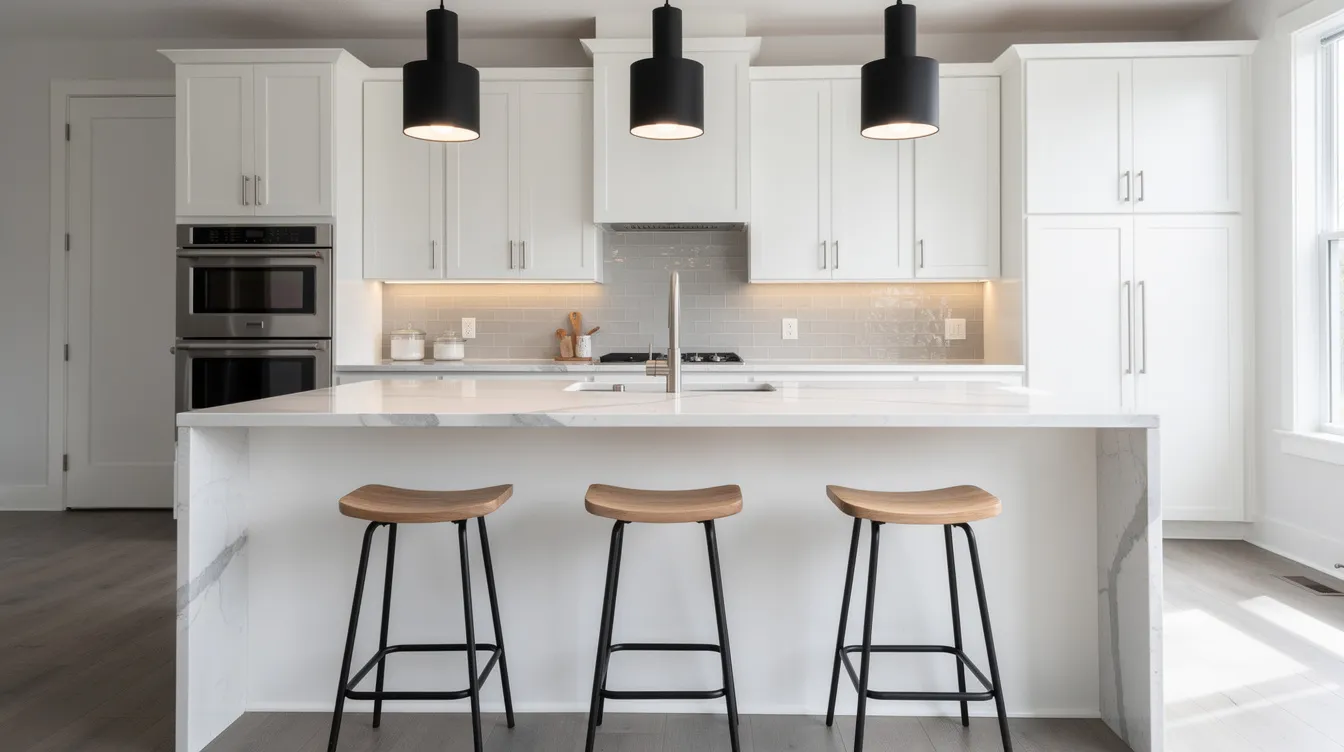
Step 3: Plan Your Workflow, Zones, and Storage
Use the work triangle to arrange the sink, refrigerator, and stove-each side should fall between 4 and 9 feet for optimal movement. No tall obstacle should sit between any two points, and major traffic paths shouldn’t cut through it. Position the dishwasher and trash near the sink for efficient workflow.
Modern kitchens also use zones. Create specific cooking zones to streamline kitchen tasks: prep, cooking, cleanup, coffee and bar, and baking. Map these onto your layout-a galley kitchen with parallel cooking and cleanup sides, an L-shape with an island prep zone, or a U-shape with a dedicated baking corner. If you’re using a virtual planner, incorporate appliances early so work zones reflect real refrigerator, oven, and sink placement.
For families, plan landing space next to the refrigerator for school lunches and meal preparation. Include snack drawers at kid-friendly heights for easy access, and tall cabinets for bulk storage from warehouse clubs.
Galant Kitchens offers storage options like deep drawer bases, pull-out trash and recycle cabinets, tray dividers, and tall pantry cabinets. Maximize vertical storage space in your kitchen design by planning interior accessories early-so cabinet sizes match your actual needs, not generic defaults. Include adequate lighting, such as layered lighting for kitchen tasks, with under-cabinet LEDs for prep zones and pendants over islands.
Step 4: Select Cabinets, Countertops, and Finishes That Support the Plan
New cabinets are the biggest visual and functional upgrade you can make. It’s like hitting the kitchen’s reset button. At Galant Kitchens, we carry an extensive selection of full kitchen cabinetry to suit homeowners across Suffolk, NY and surrounding areas.
Here’s how the main cabinet guestimate tiers compare:
Type | Cost per Linear Foot (Guesstimate)(Installed) | Lead Time | Best For |
|---|---|---|---|
Stock | $225-$325 | Days to weeks | Budget-conscious |
Special Order | $325-$400 | 4–8 weeks | Most LI remodels |
Semi Custom | $400-$550 | 6-8 weeks | Flexible finishes & sizes |
Custom | $600-$900 | 8-10 weeks | High-end, refined quality |
Select durable materials for countertops, flooring, and cabinets. Quartz guestimate runs about $65 to $95 per square foot installed and handles busy households without sealing. Premium stone guestimate, like marble or quartzite ranges from $90 to $150.
Use tall, ceiling-height cabinets to increase storage capacity-going to 96 inches visually raises the ceiling and eliminates dust-collecting gaps. Apply light colors and reflective surfaces to make kitchens feel larger, especially in areas like Lindenhurst or West Islip. For larger, well-lit spaces, two-tone cabinetry adds depth.
Integrate appliances with Cabinetry for a seamless kitchen look-panel-ready dishwashers, built-in microwaves, and counter-depth refrigerators create a clean, intentional style.
For design inspiration, picture an L-shaped kitchen with a navy island, white perimeter cabinets, warm wood flooring, and a veined quartz countertop. Browse our kitchen gallery to see how these ideas come together in real Long Island homes.
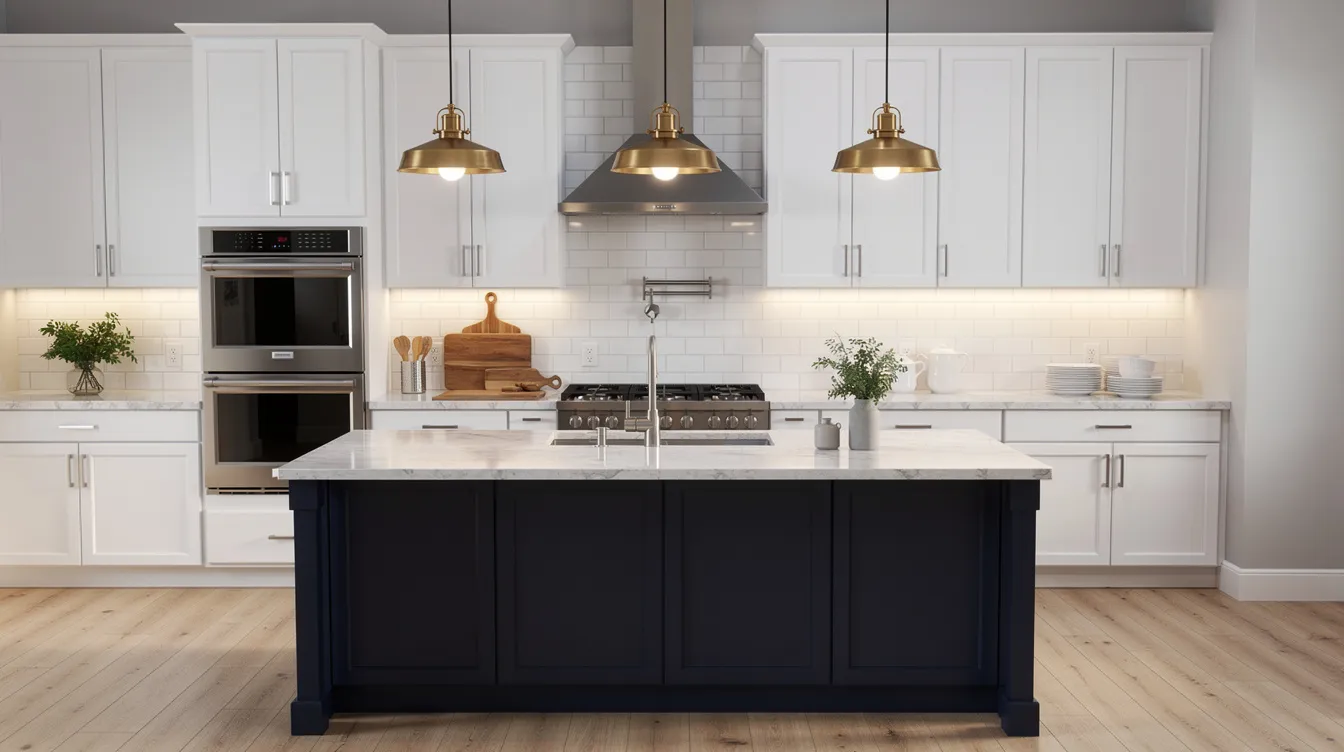
Step 5: Use Kitchen Planning Tools and Professional Design Support
While a virtual kitchen planner or online design tool is helpful for brainstorming, a local, licensed kitchen planner ensures measurements and building codes are correct. Many homeowners start with popular platforms or an app on a phone, tablet, or computer to play with layouts, then bring their ideas to expert designers for refinement.
Here are several tools worth exploring for interior design planning as well as layout testing:
Get Guestimate at Home-Depot or Lowes and bring us measurements to Galant Kitchens Designers
Measure your kitchen, and bring measurements without prior experience, the length of your kitchen walls.
Create-A-Kitchen offers a guided designer professional at Galant Kitchens to feature that walks you through each decision.
Gather inspiration photos from Pinterest boards, Instagram saves, or printed magazine pages to share during your appointment. Ask designers about building code requirements, ventilation, and how to phase a remodel to minimize time without a working kitchen.
Galant Kitchens offers a free design consultation including in-home measurements across Nassau and Suffolk counties, 3D renderings, and a detailed kitchen plan covering cabinets, countertops, and installation timeline-all at no cost to you.
Budgeting, Timeline, and Financing Your Kitchen Remodel
Determine a clear guestimate budget early in the renovation process. Here are realistic cost ranges for Long Island house renovations in 2026–2027:
Cosmetic refresh (same layout, new doors, countertops, flooring): $15,000–$30,000
Standard remodel (minor layout changes, semi-custom cabinetry, quartz): $30,000–$55,000
Full-gut renovation (structural changes, custom cabinets, premium stone): $75,000–$175,000+
A smart kitchen plan can save you from expensive mid-project changes. Cabinet choices, countertop material, and appliance upgrades are the top variables driving cost.
Typical timeline: design and selections (2–4 weeks), cabinet ordering and lead times (4–8 weeks for semi-custom), demolition, installation, and final touches like backsplash and lighting-totaling roughly 8 to 20 weeks depending on scope.
Bringing Your Dream Kitchen Plan to Life with Galant Kitchens
A solid kitchen layout, well-planned storage, and thoughtful material choices create a true dream space-not just a cosmetic upgrade. When everything works together, you get a new kitchen that’s a joy to cook in, entertain in, and live with every day. That’s the difference between a renovation and a dream kitchen.
Galant Kitchens is a licensed and insured kitchen remodeling contractor and cabinet retailer based in Deer Park, NY, serving both Nassau and Suffolk counties. If you’re interested in turning your kitchen plan into reality, we make it straightforward.
Ready to get started? Schedule a showroom visit by appointment or book a free in-home kitchen design consultation by calling (631) 586-0515 or visiting our contact page. Professional planning turns overwhelming decisions into a clear, step-by-step process-from first sketch to final cabinet installation